
SAN FRANCESCO RETURNS AMONG THE PEOPLE: PHOTOGRAMMETRIC SURVEY AND 3D PRINTING FOR HERITAGE AND SOLIDARITY
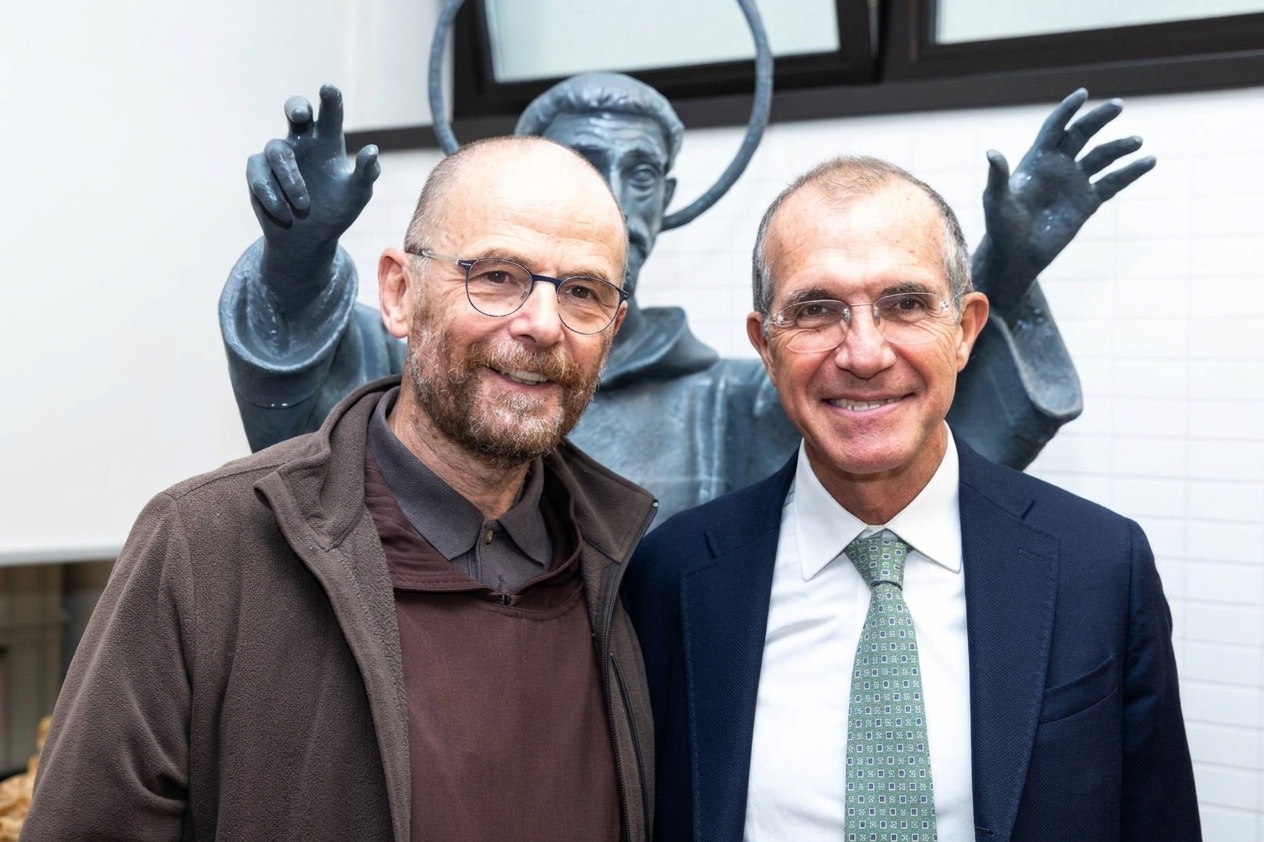
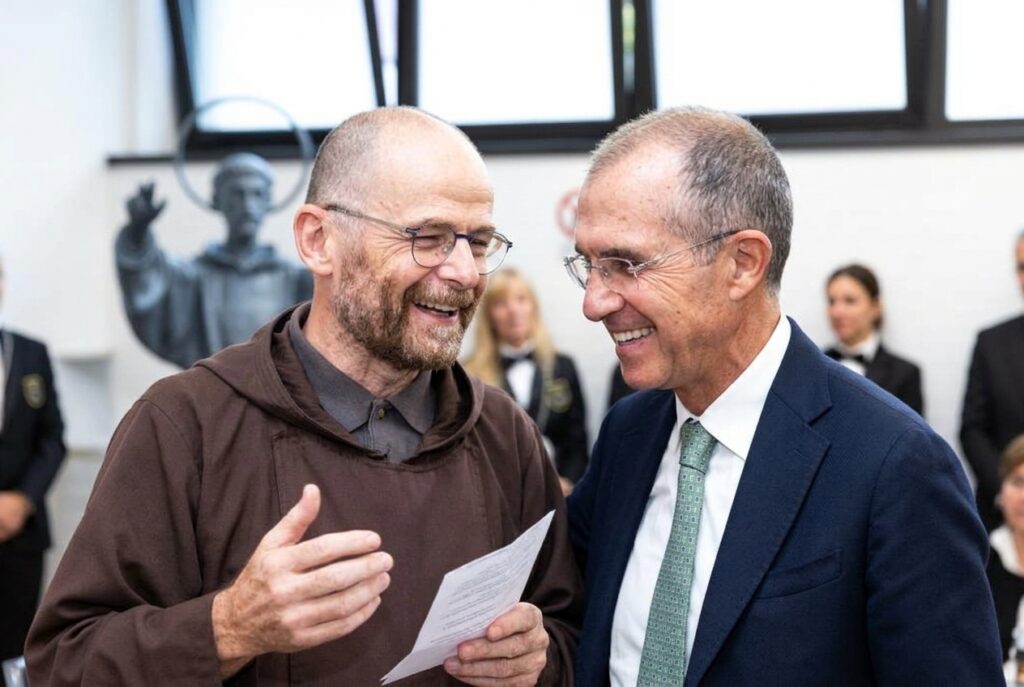
On the occasion of the 800th anniversary of the death of Saint Francis and 100 years since the laying of the first stone of the monument in Piazza Risorgimento, Milan (April 24, 1926), the University of Pavia led a synergistic project combining scientific research, artistic heritage, and solidarity. The initiative resulted in the creation of a life-sized replica (approx. 1.60 meters) of the famous statue by sculptor Domenico Trentacoste, which was donated and placed at the Opera San Francesco per i Poveri in Milan.
The Digital Twin: 3D Reconstruction
To recreate the bronze artwork from its elevated pedestal in Piazza Risorgimento as a human-scale reproduction, the University of Pavia laboratories employed a combination of advanced technologies—including 3D scanning, 3D software for model optimization, and 3D printing for manufacturing:
-
Scanning: The Geomatics Lab (Department of Civil Engineering and Architecture) captured 1,117 aerial and ground photos—partnering with Eng. Alberto Ermoni (TSAS) for drone footage—to build a incredibly detailed 3D digital model of the original statue.
-
3D Modeling: The photogrammetric processing generated a high-fidelity digital twin.
Additive Manufacturing and Post-Processing at ProtoLab
The digital manufacturing phase was developed and optimized at the ProtoLab of the University of Pavia using FDM (Fused Deposition Modeling) technology:
-
Model Segmentation: To manage the large dimensions of the statue, the 3D model was divided into 13 components to be assembled subsequently.
-
Printing Time: Additive manufacturing required a total of approximately 300 printing hours.
-
Material Used: Approximately 48 kg of metallic silver PLA was used, resulting in a final statue weighing about 40 kg.
-
Manual Finishing: The digital and 3D printing phase was followed by meticulous manual work involving assembly, sanding, filling, and surface painting.
Manufacturing Challenges
The main challenge during this 3D printing production was the print size. Working with a RatRig 500×500 printer, we had to split the statue into multiple sections, designing custom interlocking joints to assemble the individual components.
During assembly, one of the most noticeable issues was the visible seams between the parts. We partially concealed these through post-processing techniques that were intentionally planned right from the initial design phase.
Regarding 3D model optimization, several areas of the raw 3D scan were manually retouched using digital sculpting to emphasize and refine the statue’s defining features.
-
Print Volume Constraints: Given the build volume of our RatRig 500×500, the statue was divided into multiple sections featuring custom-engineered interlocking joints.
-
Seam Concealment: Visible seams during assembly were mitigated using targeted post-processing workflows integrated into the initial CAD design.
-
3D Scan Optimization: Raw scan data was manually refined via digital sculpting to highlight key aesthetic details and characteristic features of the sculpture.
Historical, Social, and Technological Value
Domenico Trentacoste’s original artwork was conceived with the intention of representing Saint Francis coming “among the people”. The sculpture’s face also holds profound historical significance for the Opera: the sculptor used Fra Cecilio Cortinovis, founder of Opera San Francesco per i Poveri, as a live model.
Digitization allows the monument to be preserved as a 3D model suitable for displays.
Project Team and Acknowledgments
The project originated from an idea by Fra Marcello Longhi (Director of Opera San Francesco per i Poveri) and was coordinated by architect Francesca Aletti and Massimo Gionso, with support from the Rotary Club Milano.
-
University of Pavia (Faculty Advisors): Prof. Ferdinando Auricchio, Prof. Vittorio Casella, Prof. Stefania Marconi.
-
Geomatics Laboratory (DICAR – UniPV): Paolo Marchese and Luca Viola.
-
ProtoLab (CompMech / UniPV): Leonardo Montaldo, Alberto Cattenone, and Beatrice Rossetti.
-
Technical Partners: Eng. Alberto Ermoni (TSAS) for the 3D drone survey; Nicolò Fiocca (AdaptAM) for project support and providing additive manufacturing technologies.