
New Publication: A Major Step Toward Scalable Artificial Spider Silk
We are excited to share our new paper, published in Proceedings of the National Academy of Sciences (PNAS)!
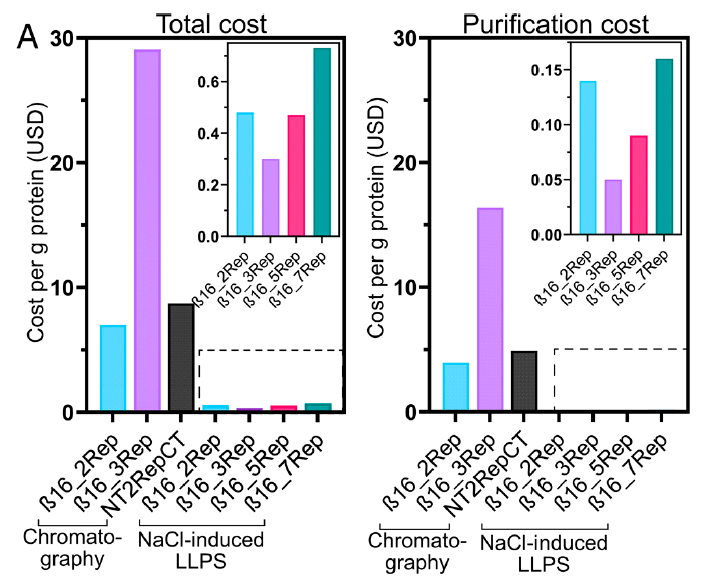
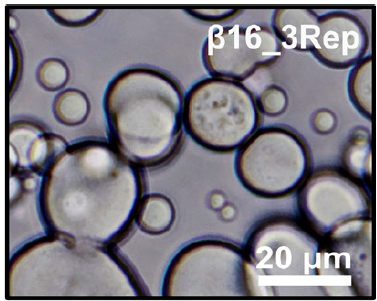
Artificial spider silk has enormous potential, but its large-scale production is still limited by complex and expensive protein purification processes. In this work, we show that liquid–liquid phase separation (LLPS) can provide a simple and chromatography-free route from recombinant protein production to high-performance artificial silk fibers.
By combining protein engineering with LLPS-based purification, we reduced purification costs by up to 99%, processing time by 80%, and water consumption by 92%, while obtaining proteins that can be directly wet-spun into tough fibers using an entirely aqueous process.
The result? A potentially scalable, more sustainable, and cost-effective platform for producing artificial spider silk—and another step toward translating these extraordinary materials from the laboratory to real-world applications. 🚀
A fantastic collaborative effort led by Rising group (from SLU): Karin Tufvesson, Viktoria Langwallner, Benjamin Schmuck, and @Anna Rising, together with all the co-authors (Tomas Bohn Pessattia, Gabriele Greco, Elin Karlssona, Sarah Stadlmayr, Axel Leppert, Michael Landreh).
We are very happy to have contributed to this work!
If you wish to read the paper check it out: https://www.pnas.org/doi/full/10.1073/pnas.2601661123
Together with EPASS news: https://gabriele-greco.com/epass/